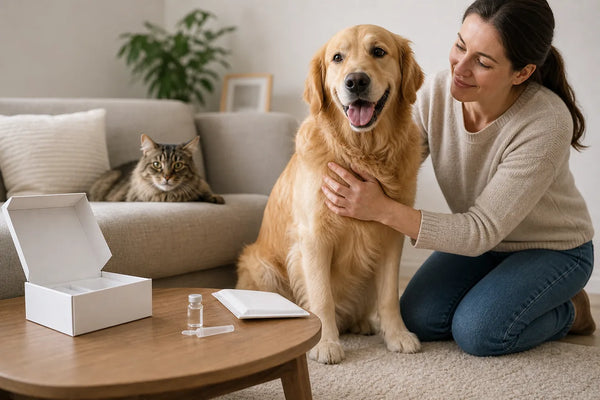
A dog fecal test kit checks a stool sample for parasites or other gut markers. Our six TotalVet tests below are different: they look at allergy or intolerance concerns, not stool. If your main worry is diarrhea or parasites, start with your vet. If itching or food sensitivities are the concern, these options may fit better.
We analyzed 28 YouTube comments about dog fecal test kits and found that 29% mentioned details of testing methods.
1. Dog Allergy Test
Dog Allergy Test is a mail-in blood test for dogs with signs such as ongoing scratching, paw licking, or repeat ear trouble. It measures allergen-specific IgE, an immune marker linked to true allergies, across up to 125 food and environmental allergens.
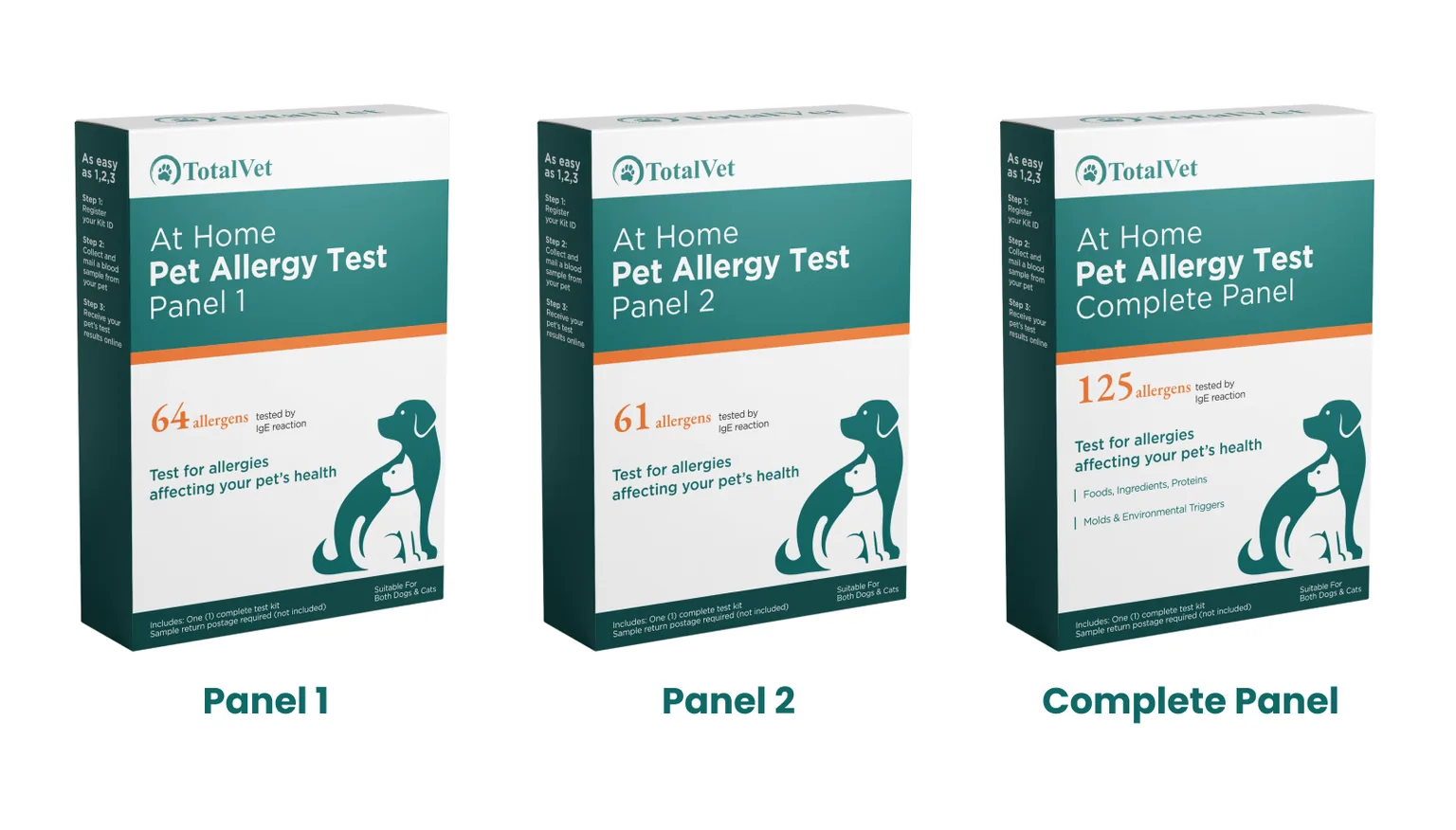
At home, you collect a few drops of blood and mail the sample to an accredited analysis laboratory. Results are available online and formatted to share with your vet. That handoff can help you discuss possible triggers and next steps without treating a test result as a diagnosis on its own.
The available panels are Panel 1, Panel 2, and Complete Panel. Current prices range from $174.99 to $229.99, depending on the option. If your dog’s main symptom is itch, this is our test that most directly matches the question you’re trying to answer.
It isn’t a fecal test. It won’t check a stool sample for Giardia or other parasites, so don’t use it as a substitute for a fecal exam when your dog has digestive symptoms.
Our comparison of TotalVet pet allergy tests can help you sort out which panel and pet-specific option best fits your concern.
2. Dog Intolerance Test
Our Dog Intolerance Test is a mail-in hair-sample test for dog owners exploring possible sensitivities. It uses bioresonance technology to analyze over 1,000 potential sensitivities. It’s priced at $99.99.
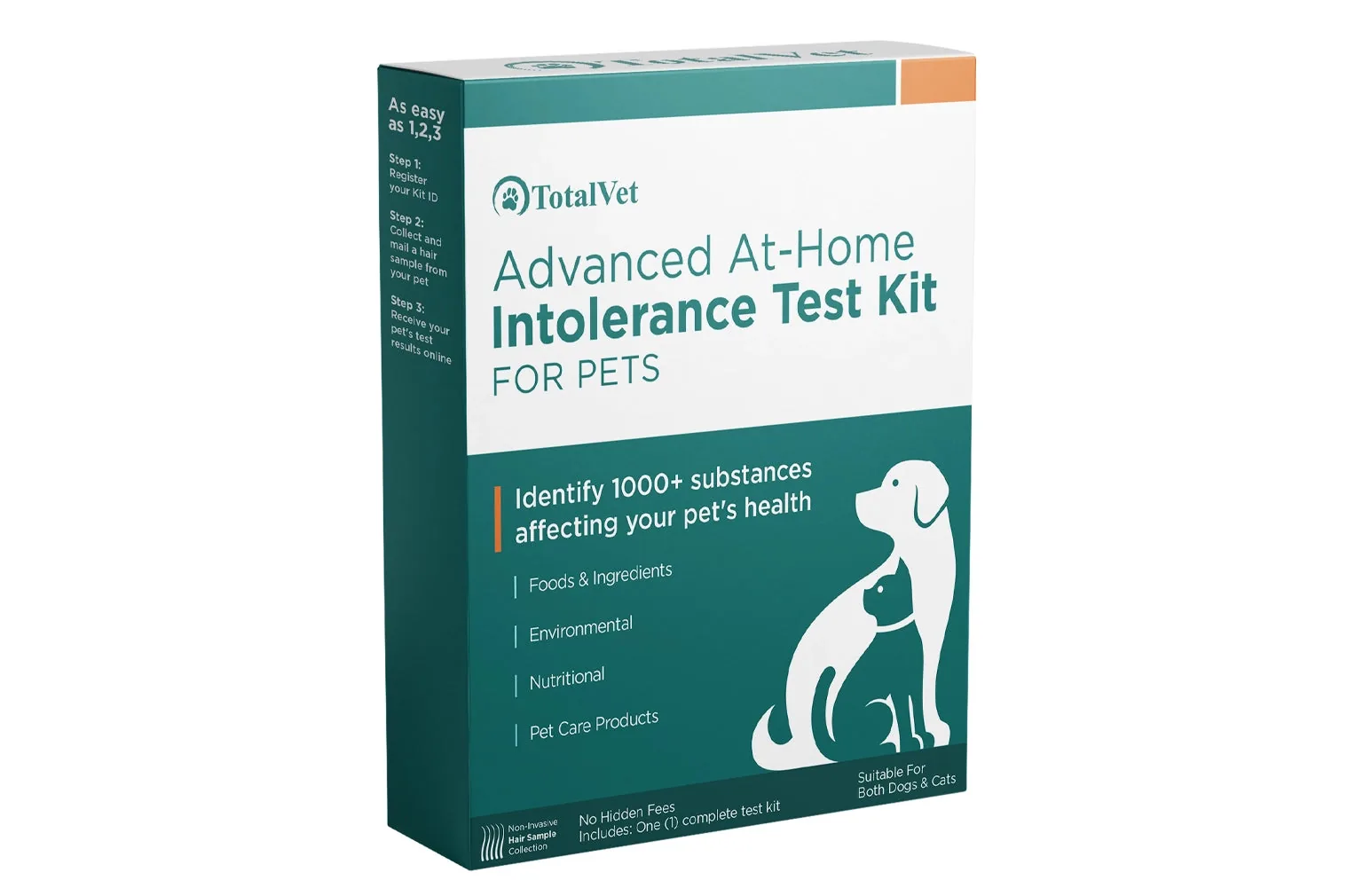
You collect your dog’s hair sample at home, return it by mail, then access the results online. The sample type makes it distinct from both a stool test and the blood-based Dog Allergy Test. Choose it only when you’re investigating the kind of sensitivity this test is designed to assess.
Keep the difference between an allergy and an intolerance in mind when you speak with your vet. This test looks at potential sensitivities. It isn’t a parasite screen or a medical diagnosis. If your dog has loose stool, vomiting, blood in the stool, or a sudden change in appetite, ask your vet what testing is needed instead.
For a pet with ongoing symptoms, bring the result into a vet conversation alongside a clear symptom timeline. Note when signs began and whether they change with meals or other routine changes. That context gives your vet a more useful starting point than a result viewed alone.
3. Cat Allergy Test
Our Cat Allergy Test is for households comparing our pet-specific allergy options. It’s a mail-in blood test for cats, with the same focus on allergen-specific IgE and up to 125 food and environmental allergens.
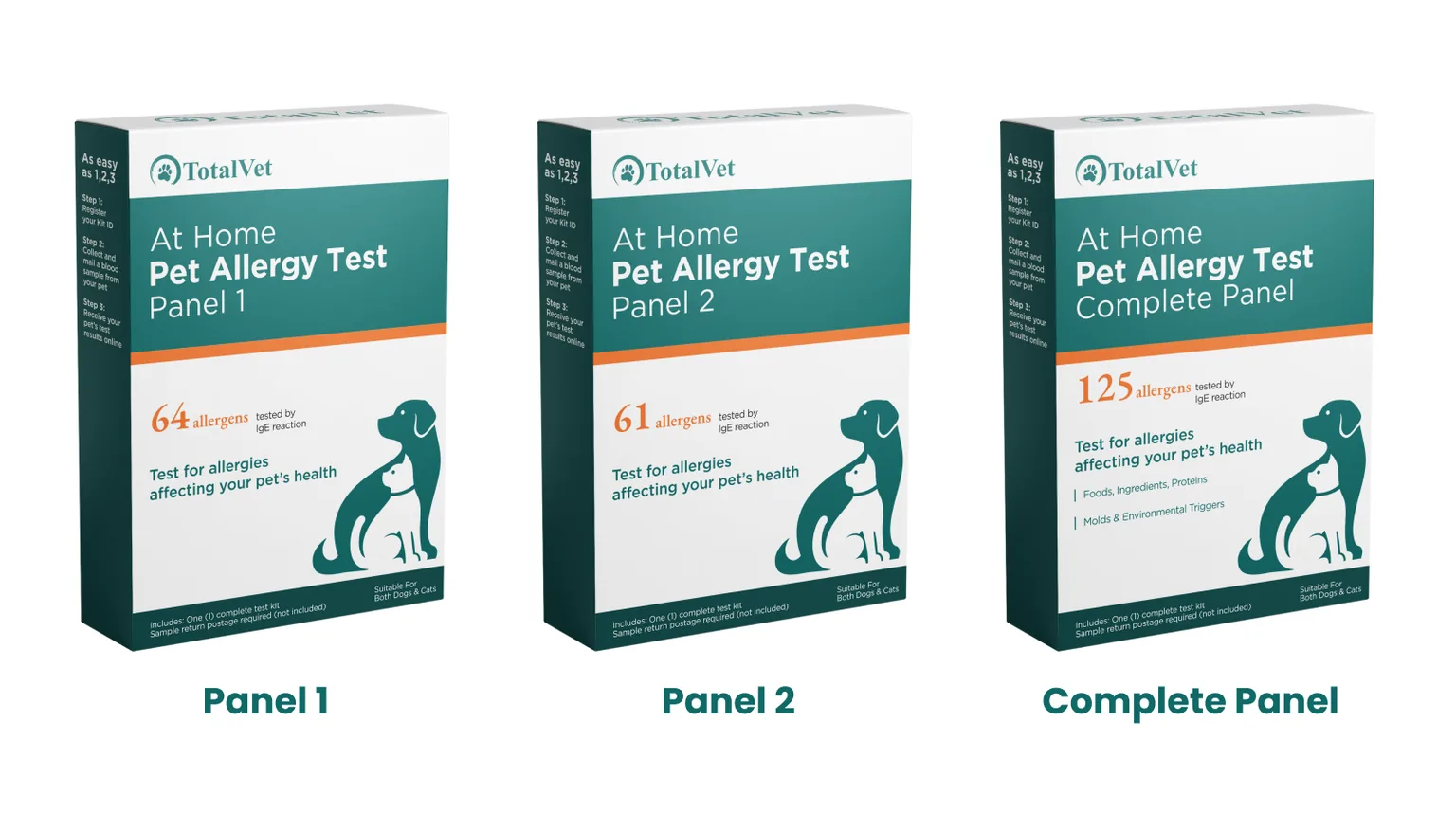
The listed panel choices are Panel 1, Panel 2, and Complete Panel. Current prices range from $174.99 to $229.99. The sample is collected at home and analyzed by an accredited laboratory. Results are available online in a format meant to share with your vet.
This is for cat allergy questions, not a dog’s stool or parasite concern. If you have both a cat and a dog, choose the pet-specific test that matches the animal being assessed. A cat result can’t answer what is causing a dog’s symptoms.
For signs such as itching or repeat ear problems, the result may give your vet a focused set of potential triggers to discuss. The next step still depends on your cat’s history and exam. A test result is one piece of that picture, not a reason to change treatment without veterinary guidance.
4. Pet Allergy Test
Pet Allergy Test is the shared dog-and-cat allergy option in this shortlist. It measures allergen-specific IgE across up to 125 food and environmental allergens, using a few drops of blood collected at home and sent for lab analysis.
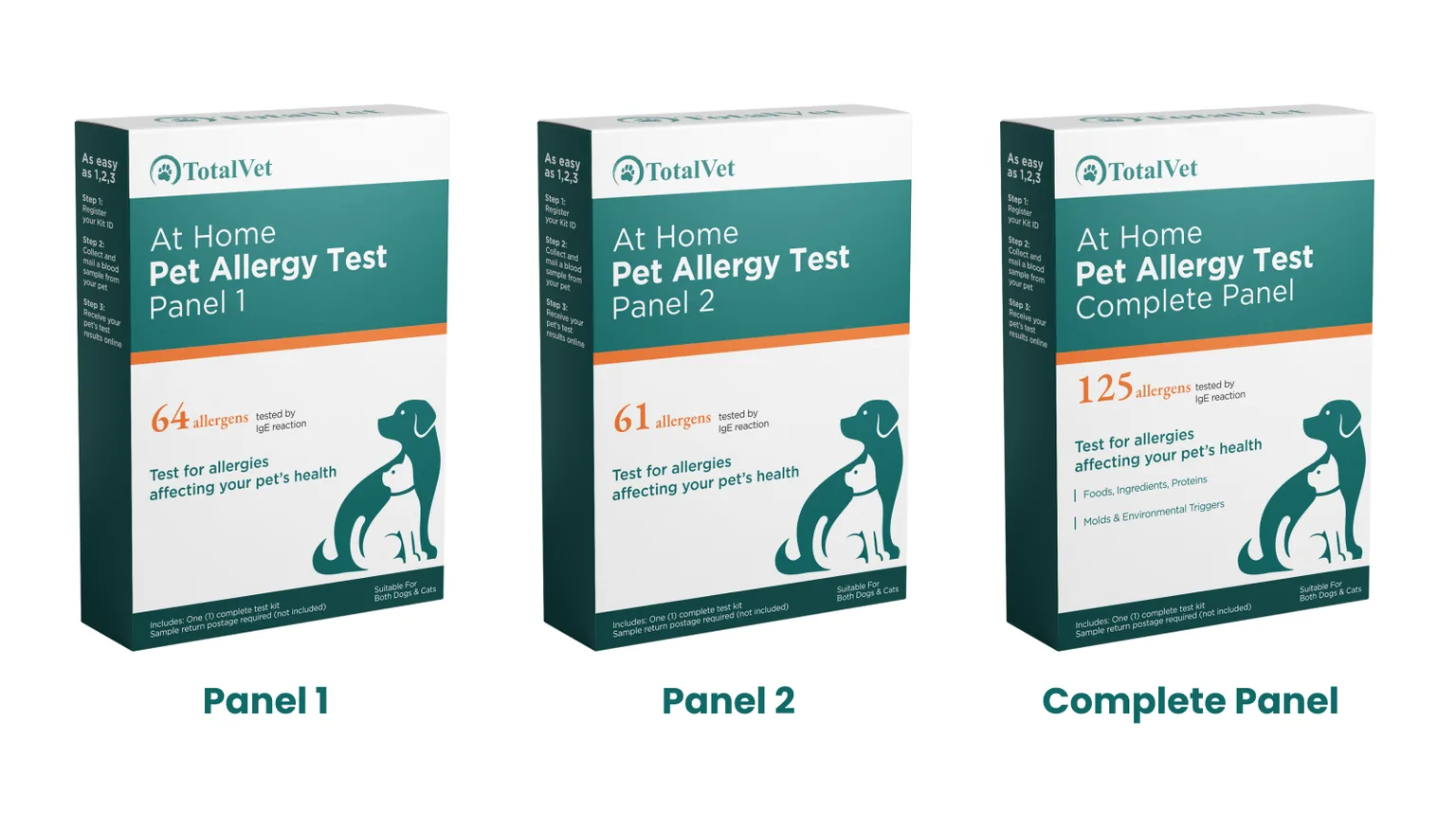
It has Panel 1, Panel 2, and Complete Panel options. Current prices range from $174.99 to $229.99. Results are available online and formatted for a veterinary discussion. That can be useful if you want one listing that covers either a dog or a cat, while still choosing the correct animal for the test.
This product is aimed at allergy questions such as ongoing itch, paw licking, or recurring ear trouble. It does not test feces. If you’re looking for parasite screening, the relevant sample is stool, and you’ll need a parasite-focused test recommended by your veterinary team.
5. Cat Intolerance Test
Cat Intolerance Test is a mail-in hair-sample test for cat owners looking into potential sensitivities. It uses bioresonance technology to assess over 1,000 potential sensitivities. It’s priced at $99.99.
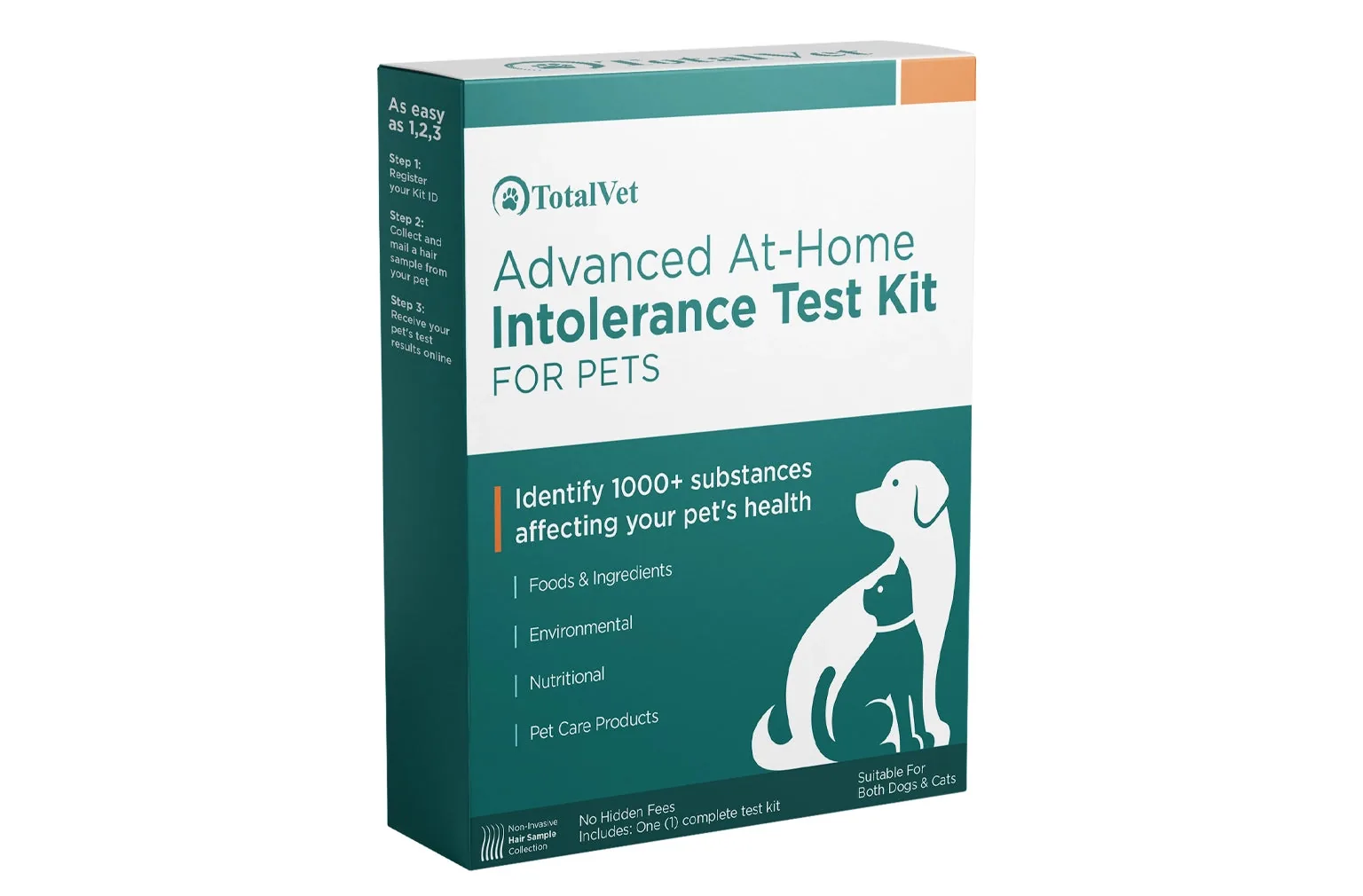
You collect your cat’s hair sample at home, send it by mail, and view results online. That differs from the blood sample used by the allergy tests. It also differs from a fecal test, which uses stool to look for gut-related findings.
If your cat has digestive signs, don’t assume an intolerance test answers a parasite question. Ask your vet which test matches the symptom. A clinic may need a stool sample for a fecal exam, while allergy or sensitivity concerns call for a different discussion.
It helps to write down what you’ve noticed before reviewing any result. Include the timing of symptoms and any changes in your cat’s routine. Share that record with your vet so the result can be considered alongside your cat’s health history.
6. Pet Intolerance Test
Pet Intolerance Test is the shared dog-and-cat hair-sample option. It uses bioresonance technology to analyze over 1,000 potential sensitivities. The current price is $99.99.
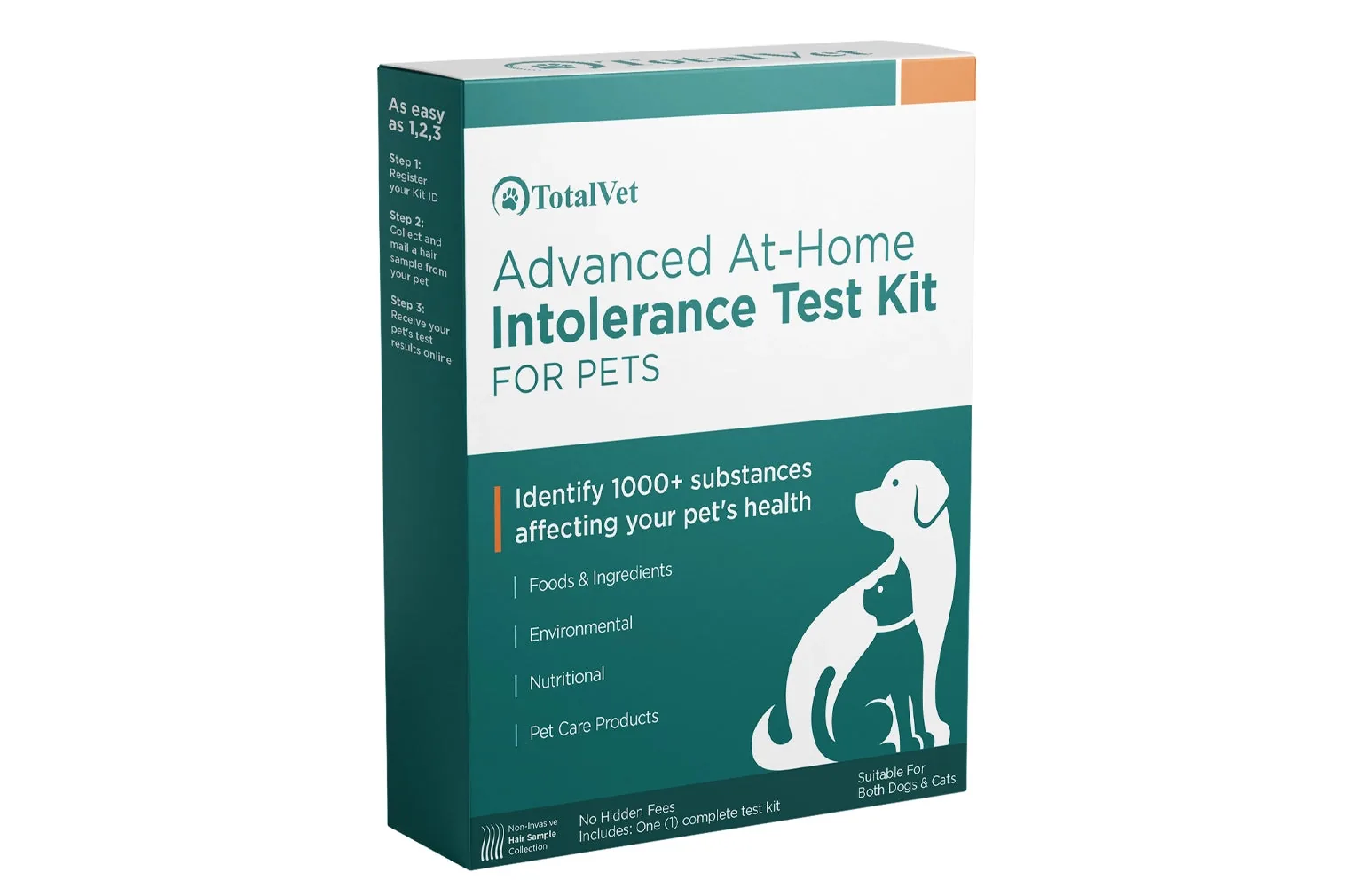
You collect hair at home, mail it in, and access the results online. This can suit a household comparing an intolerance test for either a dog or a cat. Make sure the pet details match the animal being tested, and use the result as a discussion point with your vet.
Its purpose is different from fecal parasite screening and from the blood-based allergy tests above. A hair sample is not a stool sample. If the concern is worms, Giardia, or another possible gut problem, ask for advice on a fecal test instead.
Stool-based microbiome analysis and parasite screening also answer different questions, so the symptom you’re trying to understand should guide your next step.
How These Tests Compare to a Dog Fecal Test Kit
The first distinction is the sample. Our allergy tests use blood, while our intolerance tests use hair. Neither type is a dog fecal test kit, and neither checks stool for parasites or microbiome markers.
| Option | Sample | Focus | Current price |
|---|---|---|---|
| Dog Allergy Test | Blood | Allergen-specific IgE, up to 125 allergens | $174.99 to $229.99 |
| Dog Intolerance Test | Hair | Over 1,000 potential sensitivities | $99.99 |
| Cat Allergy Test | Blood | Allergen-specific IgE, up to 125 allergens | $174.99 to $229.99 |
| Pet Allergy Test | Blood | Allergen-specific IgE, up to 125 allergens | $174.99 to $229.99 |
| Cat Intolerance Test | Hair | Over 1,000 potential sensitivities | $99.99 |
| Pet Intolerance Test | Hair | Over 1,000 potential sensitivities | $99.99 |
For parasite screening, a veterinary fecal exam is a different route. Lab methods can include flotation, where a prepared sample helps bring parasite eggs into view, or microscopy to inspect the sample. A peer-reviewed study describes stool collection approaches used for Giardia testing, including a swab method and a scoop-and-tube method. Read the study’s description of fecal sample methods as an example, not as instructions for every kit.
Lab methods also differ in how much stool they use. One peer-reviewed comparison of canine parasite tests used 1 g or 2 g of feces per test and ran each sample within 24 hours of collection. That timing belongs to the study, not to every fecal test. See the research on canine gastrointestinal parasite testing for the cited method.
There isn’t one collection or storage rule for every stool test. Follow the instructions for the specific kit or clinic. In general, keep the sample free of grass, dirt, and litter, seal it as directed, and ask how soon it must be delivered or mailed. Don’t freeze or refrigerate it unless the instructions say to do so.
Dog Fecal Test Kit FAQ
What does a dog fecal test check for?
A dog fecal test checks a stool sample for the findings its specific method is designed to detect. Parasite testing may look for parasite eggs or other signs, while microbiome testing examines gut microbes. These tests don’t all screen for the same things. Ask your vet which test fits your dog’s symptoms and health history.
How do I collect a stool sample from my dog?
Use the collection tool and container supplied with the test or clinic instructions. Collect fresh stool without mixing in soil, grass, or other material, then seal and label it as directed. Storage and delivery times vary by test, so check the instructions before collecting. If you’re unsure, ask the clinic or test provider before you start.
Can I use an at-home test instead of going to the vet?
An at-home test can provide information, but it doesn’t replace veterinary care. A vet can help choose the right test and interpret the result alongside an exam and your dog’s symptoms. Seek veterinary advice promptly if your dog seems very unwell, has blood in the stool, or has persistent vomiting or diarrhea.
How often should my dog have a fecal test?
There isn’t one schedule that fits every dog. Testing frequency can depend on age, lifestyle, symptoms, and your vet’s preventive-care plan. Ask at your dog’s next wellness visit what timing makes sense. If digestive signs appear between visits, contact your vet rather than waiting for a routine screening date.
Can a negative fecal test rule out every parasite?
No single negative result should be treated as proof that every parasite is absent. The answer depends on what the test looks for and how the sample was collected and processed. If signs continue, tell your vet even if a test was negative. The vet can decide whether another sample or a different test is appropriate.
Are our listed tests fecal test kits?
No. The six products in this list are allergy or intolerance tests. The allergy options use a blood sample, while the intolerance options use a hair sample. They aren’t stool tests for parasites or microbiome analysis. If your concern is a digestive problem, ask your vet about a fecal test.
Conclusion
Choose the sample type that fits your concern: ask your vet about stool testing for possible parasites, or compare our allergy and intolerance tests for sensitivity questions. If itch is the main issue, review the Dog Allergy Test panel options next and discuss the results with your vet.