If your dog keeps scratching, licking their paws, or getting ear trouble, an allergy may be one cause. A dog allergy blood test can look for antibodies linked to certain allergens, but it can’t diagnose an allergy on its own. Here’s what the test can show, where its limits matter, and what to ask your vet next.
We analyzed 6 veterinary and pet-care web pages (FirstVet, VCA Hospitals, Canine Bible, Whole Dog Journal, VetSpace, VetHelpDirect) about dog allergy blood tests and found that 0 mention IgG antibodies and only 2 say to rule out parasites or infection first. All 6 warn about false positives.
What a Dog Allergy Blood Test Measures
A blood allergy test looks for allergen-specific IgE antibodies. These are immune proteins that can react to certain substances, such as pollen, mold, or dust mites. The lab checks whether the blood sample shows IgE that matches allergens on the test panel.
That’s different from measuring the dog’s total IgE. A dog can have a typical overall IgE level while having more IgE linked to a specific allergen. And a healthy dog may have some allergen-specific IgE without showing signs of an allergy.
IgE is not the same as IgG. Some tests look for IgG or other antibodies and label the results as allergies or food sensitivities. But finding an antibody does not prove that an ingredient causes your dog’s symptoms. VCA’s overview of RAST testing in dogs explains that blood testing is used to help identify environmental triggers after a vet has diagnosed allergic skin disease.
That order matters. A test result may help a vet choose allergens for immunotherapy, a treatment that aims to make the immune system less reactive over time. It does not confirm that your dog has allergic skin disease, nor does it show how severe the symptoms will be.
This is why vets start with the dog, not the lab report. They review the symptoms and history, then look for other causes of itching. If environmental allergies remain likely, testing may help shape the next part of the care plan.
Food reactions need a different approach. Blood tests that claim to identify food allergies are not a reliable substitute for a supervised diet trial. A result that flags chicken or wheat, for example, is not enough reason to remove it from your dog’s diet without a plan.
One useful question to ask is, “What decision will this test result help us make?” If the answer is choosing allergens for immunotherapy, an IgE panel may have a clear role. If the goal is to prove a food allergy, ask your vet about a diet trial instead.
How Veterinary Blood Testing Works
For a veterinary serum allergy test, a clinic draws a blood sample and sends it to a lab. The lab checks the sample for IgE that reacts to allergens included on the panel. The report may show a result for each allergen, but your vet still needs to compare those findings with your dog’s signs and history.
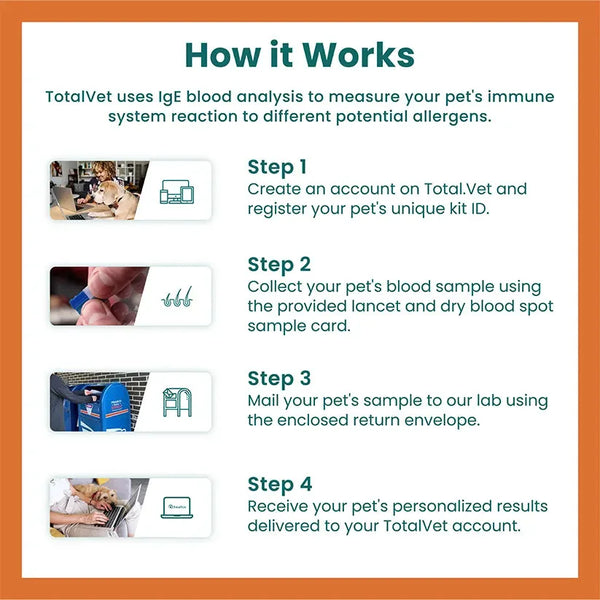
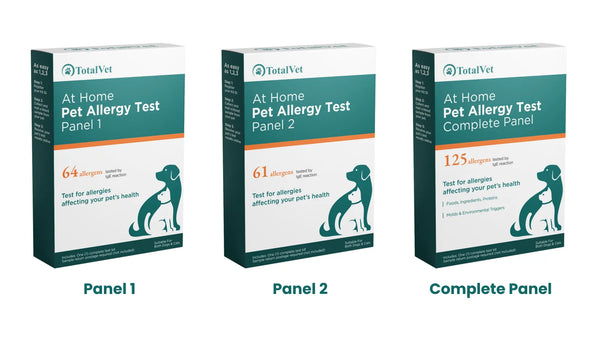
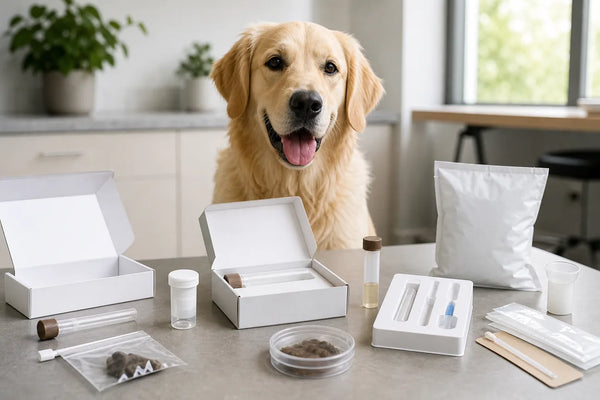
Some at-home kits use a blood spot collected on a card. The sample is then mailed to a lab for analysis. TotalVet’s Dog Allergy Test Kit is one at-home option; its kit uses a blood-spot sample and provides lab results for potential triggers. At-home collection can reduce the need for a clinic visit just to collect a sample, but it does not replace a veterinary exam.
Follow the kit instructions closely. A sample that is collected or sent incorrectly may not be usable. Keep the kit ID with the paperwork, complete the required steps, and share the report with your veterinarian rather than making major changes from the report alone.
In a clinic, the blood draw is usually a single sample. The draw itself is only one part of the process. Your vet may first check for fleas, mites, infection, or another condition that can look like an allergy. That workup helps put the lab result in context.
Intradermal testing works differently. A veterinary dermatologist shaves a small patch of fur and places tiny amounts of allergens just under the skin. The vet then checks for local skin reactions. The procedure may involve sedation, while a blood draw does not require shaving or sedation.
Neither method gives a perfect answer on its own. Skin testing is often used by veterinary dermatologists to select allergens for immunotherapy. Blood testing is easier to arrange in many cases, but results can flag substances that do not match the dog’s real-life symptoms. The best fit depends on your dog and the treatment being considered.
| Test or step | What it can help with | What it can’t settle by itself |
|---|---|---|
| Blood IgE test | Finding possible environmental allergens to discuss for immunotherapy | Whether the dog has allergic disease or a food allergy |
| Intradermal skin test | Checking skin reactions to environmental allergens for treatment planning | Whether every positive allergen causes symptoms at home |
| Elimination diet trial | Checking for a food reaction when managed and followed carefully | Which ingredient is responsible until the food is challenged |
Ask the clinic what the test is meant to guide and how the results will affect care. That keeps the test tied to a decision, rather than treating a long list of positive results as a diagnosis.
How to Interpret Results—and Their Limits
A positive result means the test detected a response to an allergen included on the panel. It does not prove that the allergen is causing your dog’s symptoms. A negative result does not rule out every allergy, either. Test panels cover selected allergens, and some dogs with allergy-like signs do not show detectable allergen-specific IgE.
Vets compare results with the dog’s pattern. A positive result for a seasonal pollen may be more useful if the itching tends to flare during that season. If the dog has year-round symptoms, a single seasonal result may not explain the whole problem.
The size of a result also isn’t a direct measure of how miserable your dog feels. A stronger lab response does not always mean worse symptoms. Skin irritation can also be affected by infection, damage to the skin barrier, and other factors.
False positives are a key limit. A test can flag an allergen that your dog encounters but does not react to in a meaningful way. Cross-reactions between similar allergens can add more noise. That’s one reason your vet should interpret the report instead of treating each positive line as a new problem to avoid.
False negatives can happen, too. A test may miss a trigger, or a dog may have signs that fit environmental allergy without detectable IgE on the panel. The VIN review of serum allergy test limits notes that allergen-specific IgE can be found in healthy dogs and that test results need clinical context.
For food, the limits are especially important. Blood results for food antibodies cannot confirm a food allergy. The usual way to investigate is a strict elimination diet followed by a planned challenge with the previous food. Your vet can help set the diet and make sure treats, table scraps, and flavored medicines do not undermine the trial.
Think of the result as one piece of a larger picture. It can help guide a treatment discussion, especially around environmental allergens and immunotherapy. It cannot tell you, by itself, why your dog is itching or what foods are safe.
Environmental Allergies, Food Reactions, and Other Causes of Itching
Allergies in dogs often show up on the skin. Common signs include frequent scratching, paw licking, chewing at the body, red or irritated skin, and recurring ear trouble. Some dogs rub their face or lose hair where they keep scratching. Sneezing or watery eyes can happen, but skin signs are often more noticeable.
Environmental triggers may include pollen, mold, or dust mites. Signs may come and go with the seasons, or they may last through the year. A dog that gets itchier at a certain time of year may give the vet a useful clue, but season alone cannot confirm the cause.
Food reactions can look much the same on the skin. Some dogs also have digestive signs, such as vomiting or loose stool, but those signs can have many causes. A blood panel cannot sort out a food allergy with enough certainty to replace a diet trial.
Fleas and other skin problems deserve attention, too. A dog can itch from flea bites even when you haven’t seen many fleas. Mites, yeast, bacteria, or other skin conditions can also cause signs that seem like allergies. Your vet may recommend an exam or simple tests to check for these before focusing on allergy testing.
A veterinary evaluation may use a history, exam, and diagnostic checks to sort through these possible causes. This work helps prevent a positive allergy test from distracting everyone from a treatable infection or parasite problem.
Keep a short symptom log before your appointment. Note when the itching began and where your dog focuses on it. Write down whether signs seem seasonal, along with the food, treats, and medicines your dog gets. These details can help your vet see patterns that a lab panel cannot show.
If your dog has ongoing skin or ear problems, bring the full picture to your vet rather than assuming food is the cause. Our overview of common dog allergy types and signs can help you name the patterns you’re seeing before that conversation.

If your dog is in pain, has worsening sores, or seems unwell, contact your veterinarian promptly. Itching is a sign, not a diagnosis, and some causes need care before allergy testing makes sense.
When a Blood Test May Help—and When to Ask About Other Tests
A blood allergy test may help when your vet has diagnosed or strongly suspects environmental allergic skin disease and is considering allergen-specific immunotherapy. In that setting, test results can help identify which allergens to include in a treatment plan.
It may also be a useful topic when intradermal testing is not a good fit for your dog or is hard to arrange. Blood collection does not require shaving or the sedation used for some skin tests. But easier collection does not make the result a diagnosis, and a positive result still needs to match your dog’s symptoms.
Ask your vet what the test would change. If the answer is that results could guide immunotherapy, discuss which test they prefer and how they will read it. If no treatment decision depends on the results, ask whether testing now is likely to help.
For suspected food allergy, ask about a supervised elimination diet instead. The trial generally means feeding a specific diet without extras for several weeks, then reintroducing the prior food under veterinary direction to see whether signs return. Even small extras can make the result hard to interpret, so plan ahead for treats and flavored medicines.
For suspected parasites or infection, your vet may choose skin or ear checks first. The order can vary with the dog’s signs. Treating fleas or an infection may reduce itching and make it easier to see what symptoms remain.
Skin testing may be worth discussing with a veterinary dermatologist when the goal is to select allergens for immunotherapy. It involves small injections into the skin and close observation for reactions. Your vet can explain what preparation is needed, including whether any medicines should be paused. Never stop a medicine without their direction.
After a useful result, treatment may involve more than avoiding an allergen. Many environmental triggers are hard to avoid completely. Your vet may discuss itch control or immunotherapy. If a food allergy is confirmed, the plan centers on avoiding the trigger ingredient. Flea control may be part of care when flea allergy is a concern.
For some dogs, a vet can manage symptoms without allergy testing. Testing is most useful when it answers a specific question and the result will shape the next step. That’s a better reason to test than simply wanting a longer list of possible triggers.
At-Home Testing and Your Veterinary Follow-Up
At-home kits can make sample collection easier, but “at home” does not mean “no vet needed for care.” TotalVet offers an at-home Dog Allergy Test Kit with lab analysis. Its reported results are for potential triggers and should be discussed with your veterinarian, especially before changing your dog’s food or treatment.
If you choose a kit, read its instructions before collecting the sample. Register the kit ID if required. Collect the sample as directed, then send it using the included return materials. Keep the report so you can share it at your dog’s next veterinary visit.
Check what kind of sample the kit uses and what the report is meant to show. A blood-based IgE result is different from a hair or saliva panel based on other antibodies. Neither type should be treated as proof of a food allergy. For food concerns, your vet can help decide whether an elimination diet is the right next step.
Write down your questions before you review the report. You might ask which results fit your dog’s symptoms, whether any finding could be a false positive, and whether the results could guide immunotherapy. If the report lists food triggers, ask how to confirm them safely rather than removing several ingredients at once.
Keep your dog’s routine steady until you’ve discussed the report with your vet, unless your vet tells you to make a change sooner. Changing food, cleaning products, and medicines all at once makes it hard to know what helped. A simple symptom log can help track changes over time.
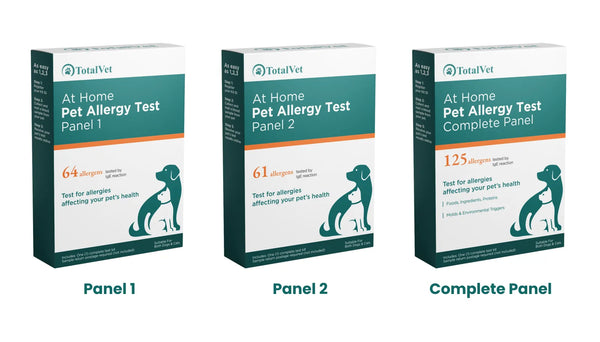
TotalVet’s catalog lists its Dog Allergy Test Kit from $174.99 to $229.99. Cost is only one part of the choice. Ask what the lab results can support, what follow-up your dog may need, and whether your vet thinks the test fits the current symptoms.
Testing should support veterinary care, not take its place. If you’re considering an at-home test, bring the product details and your symptom notes to your vet. That gives you a clearer basis for deciding what to do next.
Frequently Asked Questions
Can a blood test diagnose allergies in dogs?
No, a blood test cannot diagnose allergic disease by itself. Vets use the dog’s history and exam, while checking for other causes of itching. An IgE test may help identify environmental allergens to discuss for immunotherapy after the diagnosis. A positive result alone does not prove that the allergen causes your dog’s symptoms.
Can a blood test show what food my dog is allergic to?
No, blood tests cannot reliably confirm a food allergy in dogs. Vets usually use a strict elimination diet trial, then a planned food challenge to see whether symptoms return. Ask your vet how to manage treats, flavored medicines, and other food during the trial, since extras can affect the result.
Is a blood test better than a skin test for dog allergies?
Neither test is best for every dog. Blood testing is based on a sample sent to a lab, while intradermal testing checks the skin’s reaction to allergens. A veterinary dermatologist may recommend skin testing to guide immunotherapy. Your vet can help choose based on your dog’s health and the decision the test needs to support.
Can my dog still have allergies if the blood test is negative?
Yes. A negative result does not rule out every environmental allergy or explain every cause of itching. A panel covers selected allergens, and some dogs with allergy-like signs do not show detectable allergen-specific IgE. Your vet will weigh the result alongside symptoms and other exam findings.
Should I change my dog’s food after an at-home test?
Don’t change your dog’s diet based only on an at-home allergy report. Ask your veterinarian whether the result fits your dog’s symptoms and whether a supervised elimination diet makes sense. Changing several foods at once can make it harder to know what caused an improvement or a flare-up.
Conclusion
A blood test can help your vet explore environmental triggers, but it cannot diagnose allergies or confirm a food reaction on its own. Start with a veterinary assessment and ask what a test result would change. For help understanding food-related testing, continue with our guide to dog food allergy testing.